
Restorative Parenting: It’s Just Common Sense
Jul 22, 2026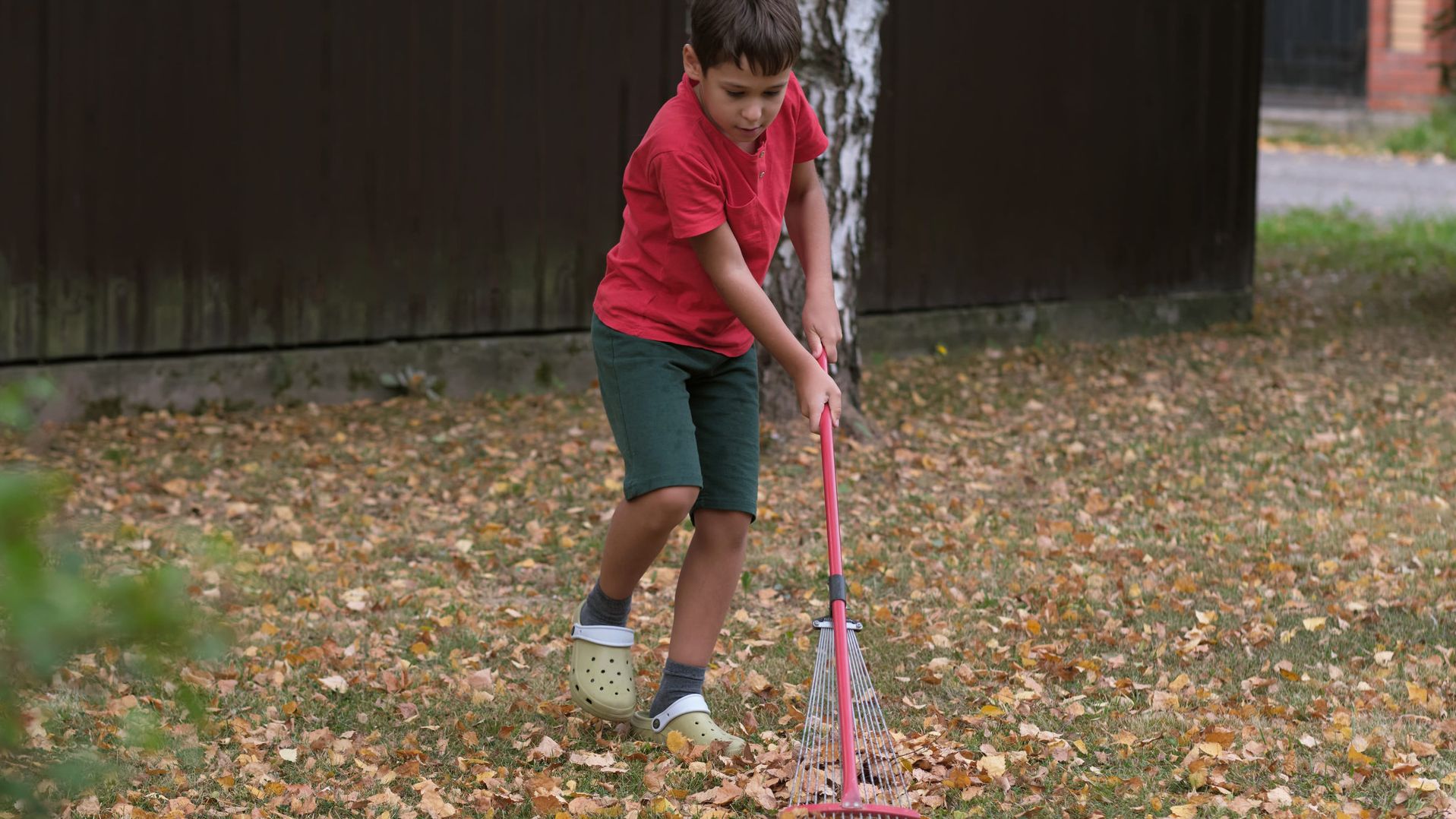
From: The Restorative Way: Harnessing the Power of Restorative Communication to Mend Relationships, Heal Trauma, and Reclaim Civility One Conversation at a Time (Bledsoe, 2024)
I didn’t realize it until decades later but my first experience with restorative justice happened when I was nine years old. My father got me a job raking leaves for a neighbor who had just lost her husband. I was going to make ten dollars, which to a nine-year old back in the ’60s was like winning the lottery. Visions of buying that new baseball bat consumed me.
I made short work raking the leaves into a big pile, and then I started practicing my swing with the rake. The rake flew out of my hands and into a window. Horrified, I finished bagging the leaves, made the slow, mournful walk back to my house, and waited for my father to come home. I was sure I was going to be sent to Donkey Island from the movie Pinocchio. I thought about hopping a train and going on the lam.
My father came home and as soon as he entered the house, as if on cue, the phone rang. It was our neighbor.
“Hello Kathryn. Uh huh, okay.” My dad looked at me. “Uh huh. All right. Well, thanks for telling me. We’ll be over in a bit,”’ he said. My dad sat down and asked, “Did something happen?” He wasn’t angry. Thinking back, he could’ve taken a more accusatory tone and asked me, “What did you do?”
I confessed. I explained what happened - what I did. “All right. Thanks for being honest,” he said. “Let’s go see Kathryn.”
Sitting there in her living room, broken window in sight, I explained to Kathryn what happened. Kathryn said, “When I came home and saw the broken window, I panicked because I thought someone had tried to break in. Ever since Hap [her husband] passed away, I’ve been struggling with living alone.”
I apologized. My dad said, “We’ll fix the window.”
We went to the building materials store, got the glass, and then he and I replaced the broken window. He had me do it, teaching me how to remove the broken glass, install the new glass with new pins, and apply glazing. The glazing was the difficult part, so he followed my nine-year-old attempt, making sure I learned how to do it correctly. He said, “We’ll need to come back after it dries and paint it.” A few days later, we did that.
Later in the evening, after we had completed the repair, Kathryn called and asked if we could come over. I was expecting a good lecture. Instead, she thanked me for being honest and taking responsibility. Then she paid me. She said, “We all make mistakes.” She also said, “You did a good job raking the leaves, and you deserve to be paid. Probably not a good idea to swing a rake like a baseball bat.” Sheepishly, I thanked her. I had no expectation of getting paid.
When my dad and I got home, he asked me what I had learned. “Not to screw around with a rake,” I said. “What else?” he asked. “To be honest?” I asked. “Yes. What else?” he asked. “How to fix a broken window,” I said. “Yes. More importantly, how to make things right when we’ve made a mistake that has hurt someone.”
Then he asked, “What else do you think you should do?” I had no idea what he was talking about, but I was afraid it would be to tell my mother. “Tell Mom?” I asked. She and my dad had very different approaches to discipline. “Maybe,” he said. “If you feel the need to, but that’s not what I’m talking about. How much did Kathryn pay you?” he asked even though he knew. “Ten dollars,” I said. “The new glass cost $2.50, the glazing and pins cost $2.50,” he said. My first thought was, ‘There goes the new bat.’ “Do you think it’s right that I should have to pay for that?” he asked. “No,” I said. I paid him $5. He said, “Now you’ve made things right with me.”
“What about the bat?” I asked. He just looked at me with a dry grin that only a father knows how to do. Clearly, my major league baseball career would have to wait a few years.
What my father did was ask 5 basic questions.
- What happened?
- Who or what is being negatively impacted?
- What, exactly, is that impact?
- Why did this happen?
- What needs to happen to repair the damage, and keep it from happening again?
I shared my story of what happened and what I did. Kathryn shared her story of what happened when she came home. She shared how it had impacted her. The reason it happened was because I was screwing around with the rake. We recognized what needed to happen to make things right. We took the necessary actions to accomplish that. I learned a valuable lesson.
These five steps, or questions, are the basic script used in restorative practices. But for my father, it was just a common-sense approach.
He didn’t know anything about restorative justice, restorative practices or restorative parenting. This was in the mid 1960s and restorative justice, let alone “restorative parenting”, didn’t appear until the late 1990s. The way he responded was, for him, just intuitive.
My point is that restoration and the restorative process is just common sense. People make mistakes. Sometimes those mistakes cause serious damage and harm. The common-sense response is to take restorative action and ‘make things right.’
These steps are the practical application of a method, but that method represents a philosophy and worldview that has profound implications for the challenges we’re facing currently, as a society and as a species. This simple, common-sense approach to human misconduct emerges from deep philosophical roots in an ancient and Indigenous wisdom that sees life, all life, as a constitution of relationships. In essence, restoration is much deeper and more expansive than restorative justice.
The thinking that punishment is a necessary, justifiable, or most effective response to misconduct came from somewhere. It, too, represents a worldview, and if we’re willing to look at that worldview, we’ll see that the relational worldview of restoration confronts a western worldview that relies almost exclusively on force and retribution as a means of establishing control over people’s thinking and behavior. And retribution is much bigger and deeper than just a punitive response to misconduct.
Retribution is a mindset. As Howard Zehr (2005) suggests, retribution is a paradigm. That paradigm is inscribed in our minds, imaginations, and relationships. Retribution is ‘where we go’ when someone disagrees with us or hurts our feelings. We flip the switch to primal judgment and contempt. Why is that? That’s our biggest problem.
These two worldviews have not only been colliding across the course of human history, but they also continue to be at war with each other in this current historical moment, and most importantly, in ourselves; in how we think about other people who we disagree with.
Though this philosophical conflict, for lack of a better term, has been going on for centuries and perhaps even further back, the consequences have never been greater for the well-being of our children, communities, governance, and the environment.
When political rhetoric is retributive rhetoric, we need to take an unflinching look at where that thinking is coming from, what purpose the statement is serving, be clear about its exploitation of fear, and most importantly, be brutally honest about the negative impact that a rhetoric of threat is having on our health, wellbeing, and especially our children.
Do we want them or us to live in a constant state of alarm? I don't. Life is too short.
