
S.H.I.F.T. - Why Connection Restores Safety When Anxiety and Trauma Take Over
Sep 22, 2026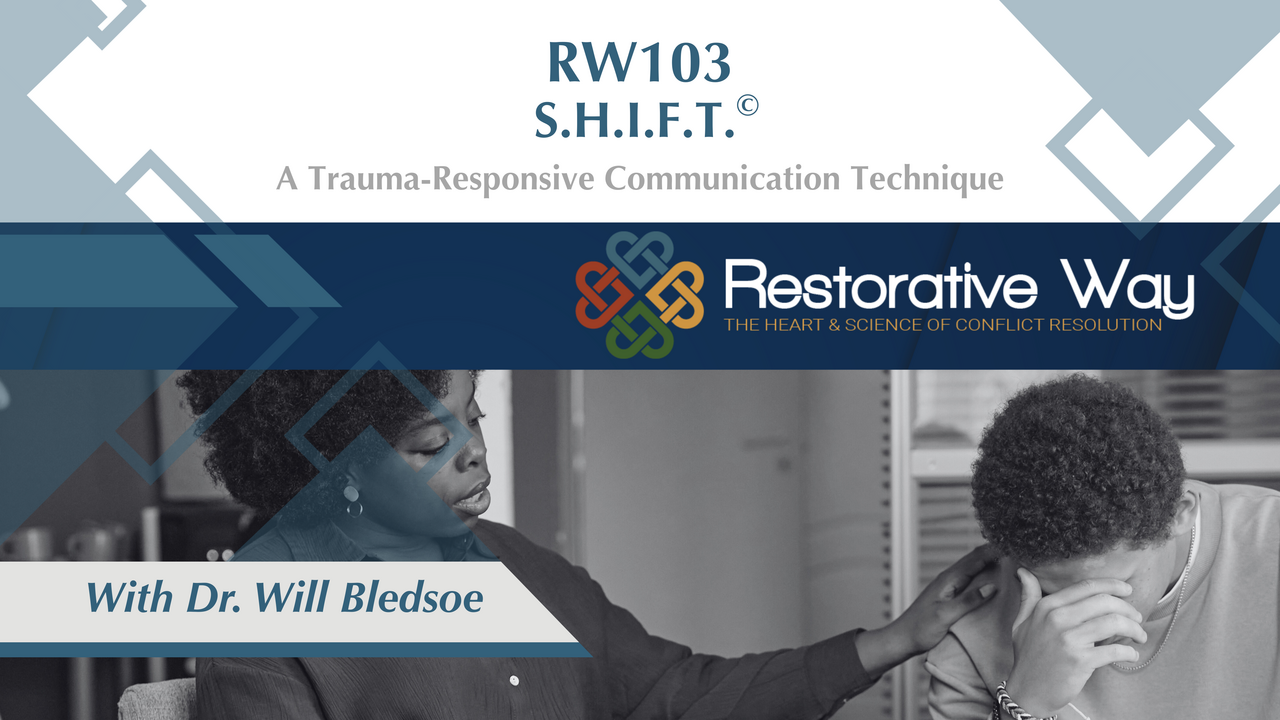
By Will Bledsoe, Ph.D. (2026)
"When Someone Is Overwhelmed by Anxiety or Traumatic Stress, Connection Beats Advice"
The S.H.I.F.T. technique is an “in the moment” trauma-responsive communication technique designed to support someone in the grip of anxiety, distress, or traumatic stress. It draws on restorative principles, relational neuroscience, and the understanding that unresolved trauma shapes how people think, feel, behave, and relate. Rather than focusing on fixing behavior or forcing calm through willpower, it prioritizes human connection, empathy, and support as the pathway to nervous system and emotional regulation and healing.
Why Use It?
People experiencing acute anxiety, distress, or the lingering effects of traumatic stress often operate from a nervous system stuck in survival mode. In that state, the capacity for clear thinking, emotional balance, and constructive interaction shrinks. Traditional responses—telling someone to “calm down,” offering advice, or pushing them to talk through the problem—can inadvertently increase isolation or heighten the sense of threat. The body does not feel safe, so change remains out of reach.
S.H.I.F.T. works because regulation is fundamentally relational. Humans are wired for co-regulation: the presence of a calm, attuned other can help settle a dysregulated nervous system.
When someone is flooded by fear or overwhelm, they need more than words of reassurance; they need an interaction that signals safety, presence, and shared humanity.
The S.H.I.F.T. technique provides a structured yet compassionate way to offer that signal in the moment. It is especially valuable in high-stress environments—schools, workplaces, families, healthcare, justice settings—where trauma-related stress surfaces frequently and where quick, skillful support can prevent escalation or secondary harm.
The deeper “why” is restorative. Trauma and distress often leave people feeling alone in their anguish, unseen, or powerless. Engaging with them through this technique restores dignity, acknowledges impact without judgment, and opens space for the person to regain a sense of agency. It treats the distressed individual not as a problem to manage but as a person whose experience matters and whose nervous system can be supported toward balance.
What is the Expected Outcome?
When used effectively, S.H.I.F.T. helps the person move from a state of heightened threat toward greater safety and regulation. Key outcomes include:
- An immediate sense of being safe, cared for, and not alone. The interaction conveys that someone is present and willing to meet them in their distress rather than turning away or trying to shut it down.
- Co-regulation of the nervous system and emotions. Through attuned connection, physiological arousal can begin to settle, allowing breathing, heart rate, and emotional intensity to ease.
- Restoration of mental and emotional balance. As the sense of overwhelm decreases, the person regains clearer access to thinking, perspective, and the ability to engage more constructively with the situation or relationship.
- Strengthened relational harmony and trust. The process models respect and mutual support, which can repair micro-ruptures caused by distress and reduce the isolation that traumatic stress often creates.
- Greater capacity for longer-term healing and resilience. By interrupting the cycle of dysregulation in the moment, it creates conditions in which deeper restorative work (such as addressing underlying needs or impacts through related processes) becomes more possible.
Over time and with consistent use in communities or systems, it contributes to cultures that are less reactive and more responsive to trauma.
These outcomes are not about erasing difficult emotions or achieving permanent calm. They center on returning the person to a more regulated baseline so they can access their own resources, feel supported, and move forward without the added burden of feeling abandoned in their struggle.
Why is it Effective?
S.H.I.F.T. works because it aligns with how the nervous system and relationships actually function. Trauma and acute stress activate survival responses that prioritize threat detection over social engagement or higher-order thinking. Verbal reasoning or problem-solving alone often fails in that state because the brain regions needed for them are offline. Connection, by contrast, activates those regions by "speaking the language of safety-through-empathy" that the body understands.
The technique is grounded in the neuroscience of communication and co-regulation. A regulated, present other can help shift the distressed person’s physiology through cues of safety—tone of voice, body language, presence, attunement—rather than through cognitive override. It avoids blame, shame, or pressure, which would otherwise reinforce the threat response. Instead, it fosters an experience of being met with care, which allows the nervous system to stand down enough for balance to return.
Its effectiveness also stems from its restorative roots.
By focusing on relationship and shared humanity rather than control or correction, it addresses both the immediate physiological need and the deeper human need to feel seen and connected.
In environments where traumatic stress is common, this approach reduces secondary traumatization for both the person in distress and the supporter. It builds practical capability for everyday moments of crisis, turning potential breakdowns into opportunities for regulation and repair.
S.H.I.F.T. is effective because safety is the precondition for change, and safety is most reliably created through genuine human connection. When someone is struggling with anxiety, distress, or traumatic stress, offering that connection in a skilled, trauma-responsive way does more than soothe the moment—it restores a sense of belonging and possibility that supports healing.
Restorative Way teaches the technique in a dedicated course (RW103 in their certificate program) which covers the neuroscience foundations, how to identify signs of trauma-related stress, the specific steps of the technique, and practical application for co-regulation.
Full step-by-step details and examples are also provided in their training materials and Playbook and "The Restorative Way: Harnessing the Power of Restorative Communication to Mend Relationships, Heal Trauma, and Reclaim Civility One Conversation at a Time" rather than in publicly available excerpts.
To learn the 5 Step S.H.I.F.T. technique and how to apply it, enroll in Restorative Way's self-paced online course "The S.H.I.F.T. Technique."
